Oil Painting Safety
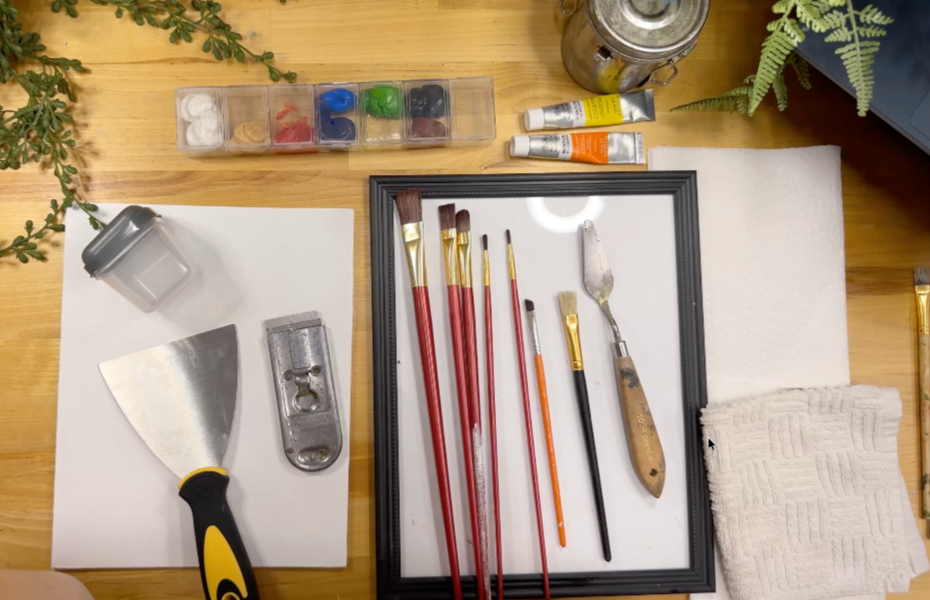
Painting with oils at home is a great hobby and very safe if you understand your materials!
This guide will help give you the information you need to know.
Paint: Some people fear that oil paints are toxic- which has some truth to it, but is overstated. Oil paint is typically composed of linseed oil and pigment. Linseed oil is harmless, and different pigments have different traits. Paints today often use alternative pigments to those used in the past to become non-toxic. For instance, Cadmium is a toxic pigment, but if your paint tube says cadmium HUE - it is a safe, alternative pigment to mimic the toxic pigment. You can always google the pigment number, like PB29 (Ultramarine Blue) and ask if it is toxic if you want to be very vigilant. Regardless, even if a pigment has toxic qualities, as long as you don’t eat your paint or put it in your eyes, it can’t hurt you. There are no fume issues with the paint itself. Just avoid eating while painting and wash your hands well after sessions. I like to use a nail brush with dish soap to scrub down after painting before I eat or interact with my baby just to be extra safe.
Solvents: Solvents are used to dissolve the oil in the paint to thin it down, or to clean your brushes. Gamsol is an artist grade solvent that has been refined to be as health conscious as a solvent can be. That said, it does still have some vapors that aren’t good for your health. Vapor buildup: Even though it is odorless and has aromatic solvents refined out (less than 0.005% remaining), concentrated vapors in a small closed room could irritate your respiratory tract, cause headaches, or induce dizziness. So, use Ventilation: Always use Gamsol in a room with open windows or good mechanical airflow to keep vapor levels low. Never injest Gamsol- call poison control if you do. Do not pour it down the sink. It must be taken to a waste facility if you ever want to dispose of it. But as it is self cleaning, meaning sediment will settle to the bottom and the liquid will become clear at the top- you can just pour clear liquid into a new jar and then let the old sediment dry and throw that away. (Use an air tight glass jar or metal brush cleaning jar)
**If you would like to avoid any health issues entirely, simply use Eco-Solve from Natural Earth Paint, it is truely non-toxic (and also can be reused with sediment settling to the bottom). Some artists even skip solvents all together and use oils and soaps alone to clean their brushes. You can find lots of information online.
Spontaneous Combustion: Rags soaked with drying oils (linseed oil, walnut oil, etc.) can spontaneously combust if left crumpled. After painting, simply lay oily rags flat to dry before disposing of them and it won’t be an issue.
Keep your supplies away from children and pets- if you are highly sensitive or want to be extra careful, I recomend looking at Natural Earth Paint. They only use non-toxic, eco friendly materials. Personally, I use their eco-solve at home 90% of the time since I have a baby around, but I use typical craft store Winsor and Newton oil paints (and other brands as well).
Stains: Oil paint usually comes out of clothes if you catch it before it dries (which takes hours to days!) I just scrub the spot with dawn dish soap and then launder as usual, ideally that day.
Have fun! Hopefully, this eased your concerns and didn’t plant new ones- honestly, I used oil paints for years (in and beyond university) before I even found out and understood all this. Just follow safe practices, don’t eat the paint, and enjoy!
Contact
Take care and reach out if you have questions or concerns
CONTACT
Excited to connect with you
